Wondering what your shoes are actually made of, and whether greener ones exist? Sustainable footwear materials mean recycled fabrics, bio-based leathers and simpler construction, but claims vary widely, so check the details.
This guide is part of our look at footwear trends, where materials sit alongside shape and style.
| Item | Value |
|---|---|
| Annual global footwear production | Over 23 billion pairs a year |
| Footwear waste in the EU | Around 1.2 million tonnes a year |
| Share of EU footwear waste recycled | About 5% |
| Carbon footprint of an average classic shoe | 13.5 kg CO2eq |
| Carbon footprint of an eco-engineered shoe in one study | 2.23 kg CO2eq (83.5% lower) |
These figures come from the European Outdoor Group and a research paper on the carbon footprint of sustainable footwear. Figures can change, so check the source before you rely on them.
Why conventional footwear materials are hard to fix
A single sneaker is a bundle of parts. According to a January 2024 opinion piece from Eco-Business, a sneaker or running shoe can be made of as many as 65 materials and components, many bonded with adhesives that hinder disassembly for recycling.
A research paper from a Romanian leather and footwear institute gives a lower average of five different materials per shoe, assembled with glue or stitches. Counting methods differ, but the problem is the same: separating the parts is difficult.
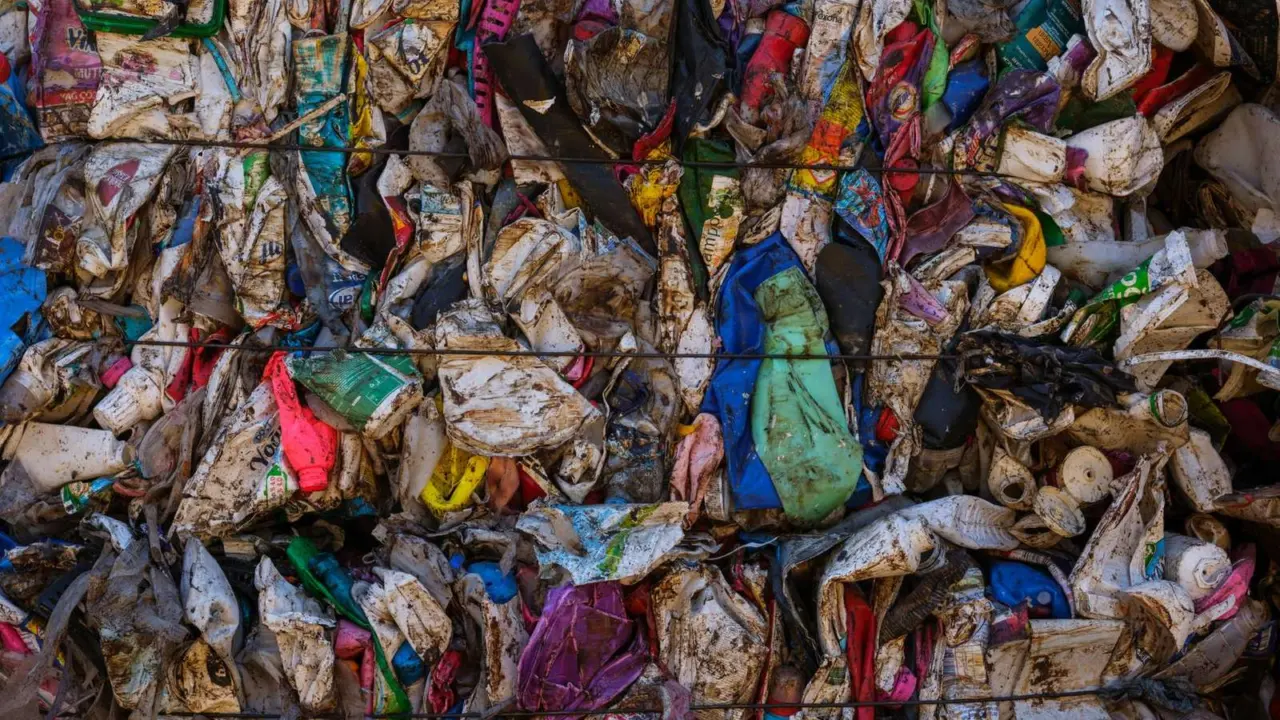
Scale makes it worse. The European Outdoor Group reports that the industry produces over 23 billion pairs a year, while around 1.2 million tonnes of footwear waste arise annually in the EU with only about 5% recycled.
The same Eco-Business piece says synthetic materials in sports footwear rely on fossil fuels and harmful chemicals. It names these common examples:
- Polyester and nylon
- Elastane
- EVA foam
- Polyurethane
- Most rubbers
The research paper cites an estimate from the consultancy Quantis that the footwear sector is responsible for 700 million tonnes of CO2 eq, or 1.4% of global greenhouse gas emissions, with much of it tied to raw material extraction (Index Copernicus paper).
It helps to compare a shoe with simpler clothing. Eco-Business contrasts a basic T-shirt, which might be a single material such as 100 per cent polyester, with a sneaker built from far more parts. That is why shoes do not fit neatly into the recycling streams that exist for simpler textiles.
The research paper explains what recycling a shoe involves once it has been taken apart. The steps look like this:
- Disassemble the shoe, which glue and stitching make difficult.
- Sort the separated materials by type.
- Process each one by shredding, melting or purifying it so it can be used in new products.
Each step adds effort, and the same paper says landfill is still the main destination for footwear waste (Index Copernicus). That fits the European Outdoor Group finding that only about 5% of EU footwear waste is recycled.
Even a shoe made from a single recycled material is not a complete fix. Eco-Business warns that microfibre and microplastic pollution remains a significant concern, even when recycled and recyclable products are created. The same article describes a market awash with confusing contradictions and a lack of consistency and transparency. For you as a buyer, the lesson is to judge a shoe by its whole life, from raw materials to disposal, and not by one green-sounding component.
What recycled fabrics and soles can achieve
A 2023 conference paper analysed the carbon footprint of 11 models of sustainable footwear. The uppers used recycled PET and recycled cotton fabrics, and some soles used bio-based TPU or natural rubber (Index Copernicus).
According to the same paper, each fabric was recycled in percentages from 40 to 100% and was recyclable. The soles allow 100% recycling by mechanical grinding.
The headline result was a footprint of 2.23 kg CO2eq, against an average of 13.5 kg CO2eq for a classic shoe, a reduction of 83.5%. The authors add that results depend on the type and quantity of materials and on whether the footwear is repaired or recycled, so treat this as one design, not a rule for every shoe.
Are bio-based leathers the answer?
Targets to cut plastics have pushed investment into bio-based alternatives such as mushroom leather, Pinatex (pineapple leather) and cactus leather, as Eco-Business notes in its January 2024 piece.
The same article says these materials are still developing, and cost and performance trade-offs challenge both consumers and brands. It also warns of greenwashing, because many bio leather products are still mixed and bonded with fossil-fuel based materials such as polyurethane, which undermines biodegradability and makes recycling impossible.
In practice, a “plant-based” label tells you the source of one layer, not what the whole shoe can do at the end of its life. Ask what the backing and coating are made of.
How construction decides whether a shoe can be recycled
Materials are only half the story. The 2023 paper describes a STROBEL construction in which the upper is sewn to the sole with minimal, water-based glue, giving a shoe that is easier to take apart at the end of its life (Index Copernicus).
Take-back schemes are less certain. As of Eco-Business’s January 2024 article, Nike’s Move to Zero refurbishment scheme had been paused indefinitely, which the authors read as a sign of viability issues (Eco-Business).
The article adds that schemes which grind shoes into playground or track surfaces largely involve downcycling, with limited or no options for future recycling.
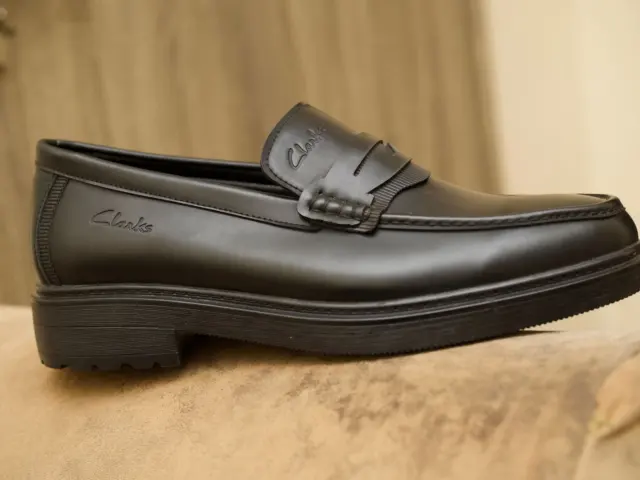
These questions apply to every style. If you follow the chunky sneaker trend, ask what the thick foam sole is made of and whether it can be separated from the upper. If you prefer the loafer trend, ask the same about the leather, lining and sole.
What to check before you buy
Use this short checklist when a pair is marketed as sustainable:
- Look for the exact share of recycled content, not just the words “recycled” or “eco”.
- Check whether the shoe is mostly one material or many, and how the parts are joined.
- Ask whether glue is minimal and whether the sole can be separated.
- Look for repair or take-back options, and ask what happens to returned pairs.
- Treat carbon claims with care unless the brand shows how they were measured.
That last point matters: Eco-Business says many sustainable shoes boast a reduced or offset carbon footprint, but these claims often remain unsubstantiated.
Frequently asked questions
Are recycled materials always more sustainable?
Show answer
Not automatically. Eco-Business notes that many “sustainable” shoes use recycled polyester or plastic bottles yet rarely include repair or end-of-life solutions, so look at the whole shoe.
Why are shoes so hard to recycle?
Show answer
They combine many materials bonded with adhesives. A sneaker can contain as many as 65 materials and components, according to Eco-Business in January 2024.
Can I recycle my old shoes?
Show answer
Rarely at scale. The European Outdoor Group reports that only about 5% of EU footwear waste is recycled, so check whether a brand or local scheme offers take-back before you assume it does.
What are bio-based leathers made from?
Show answer
Examples named by Eco-Business include mushroom leather, Pinatex made from pineapple, and cactus leather. Many are still mixed with polyurethane, so ask what else is in the material.