Not sure what to look for in work boots? Start with the safety rating that matches your hazard, then check the fit and materials. A boot that is certified, fits well and suits your site is the right one.
This page is part of our wider footwear buying guide, which covers other kinds of shoes and boots.
| Safety label or feature | What it means (ASTM F2413-24) |
|---|---|
| I/C toe cap, impact | 75 lbf minimum impact force |
| I/C toe cap, compression | 2,500 lbf minimum compressive force |
| SR slip resistance | COF of 0.4 or greater on wet and dry surfaces |
| SRO slip resistance | COF of at least 0.33 on oily wet surfaces |
| PR puncture plate | Outsole withstands 270 lbf |
| EH electrical hazard | Protects against open circuits up to 600 volts in dry conditions |
These figures come from EHS Today’s September 2025 guide to protective footwear. Standards get revised, so check the source and the label on the boot before you rely on them.
Start with the hazard, not the brand
Before you compare boots, list what could actually hurt your feet at work. The hazard decides which rating you need, and style or price come after that.
- Falling or rolling objects call for a safety toe cap.
- Nails, blades and scrap metal underfoot call for a puncture plate.
- Wet, oily or debris-covered floors call for a slip-resistant outsole.
- Heavy objects that could land on the top of the foot call for metatarsal protection.
- Live circuits or static-sensitive areas call for electrical hazard or static dissipative boots.
As of the April 2018 issue of Occupational Health & Safety, OSHA’s section 29 CFR 1910.136 covers occupational foot protection. Its paragraph (a) requires protective footwear where there is a danger of foot injuries from falling or rolling objects or objects piercing the sole, as that article explains.
The same article cites U.S. Bureau of Labor Statistics data showing approximately 100,000 occupational foot injuries in 2016, averaging 10 days away from work. That is a good reason to treat the hazard check as the first step.
Before you spend any money, ask your employer which ratings your job requires. This site is independent and educational, so it cannot tell you what a specific workplace requires.
What do the ASTM safety labels mean?
For construction, general industry and food processing, OSHA mandates compliance with ASTM F2413, according to EHS Today’s September 2025 guide. The same guide says the ASTM F2413-24 standard was revised in 2024 with updated test methods, slip resistance criteria and more transparent labeling.
Look for these letters on the label:
- I/C: the toe cap withstands an impact force of 75 lbf and a compressive force of 2,500 lbf at a minimum.
- SR: a coefficient of friction (COF) of 0.4 or greater on wet and dry surfaces.
- SRO: meets SR, plus a COF of at least 0.33 on oily wet surfaces.
- PR: the outsole can withstand 270 lbf, thanks to a plate between insole and outsole.
- MT: metatarsal guards must maintain 1 inch of clearance under a 75 lbf impact.
- EH: non-conductive materials for accidental contact with open circuits up to 600 volts in dry conditions.
- SD: static dissipative boots that help prevent static buildup in settings such as electronics manufacturing.
When a seller calls a boot “non-slip”, look for an ASTM slip resistance rating on the label instead of trusting the wording. Footwear that meets the requirements is certified by an independent lab, which issues a Certificate of Conformance, per the same EHS Today guide.
Steel, aluminum or composite toe caps
The ASTM standard does not require the toe cap to be made of a specific material. Steel, aluminum and composite caps can all provide the necessary protection, so the choice comes down to your work conditions.
- Steel: the strongest, and the most popular with construction workers at greater risk of impact and compression injuries.
- Aluminum: lighter than steel, and a good choice for industrial and warehouse work.
- Composite: the lightest, and preferred for cold storage and temperature-controlled food processing because composites don’t conduct cold as well as steel or aluminum.
Whichever you pick, check that the label carries the I/C marking. A lighter cap is no use if the boot lacks the rating your site needs.
How should work boots fit?
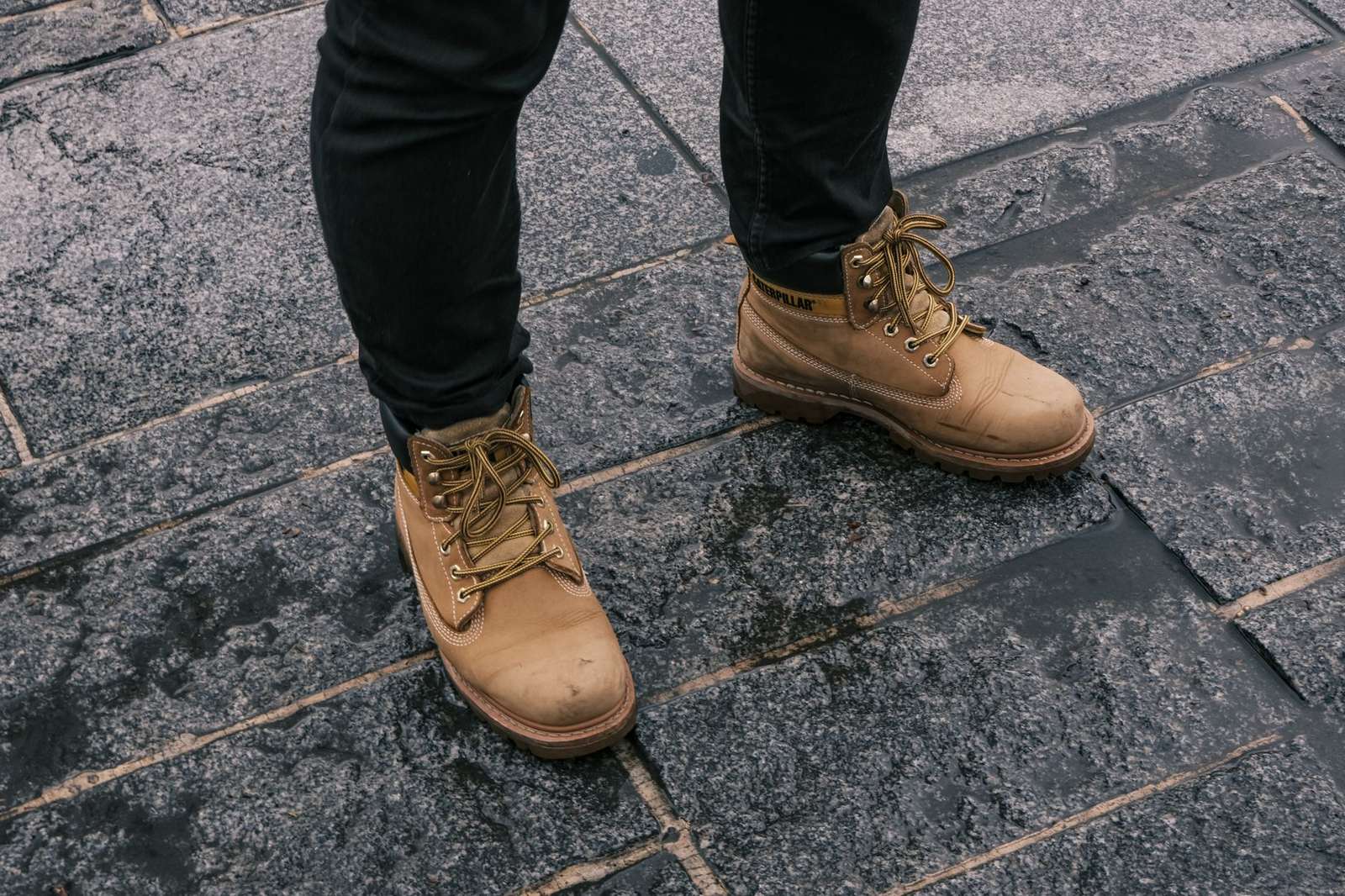
A certified boot that hurts will end up in the back of the cupboard, or worse, on your feet half-laced. Fit is what makes the protection usable for a whole shift.
- Try boots on with the socks you actually wear at work.
- Check that your toes can move without pressing against the toe cap.
- Walk around the shop, including up and down any stairs on offer, and make sure your heel stays put.
- Stand still for a few minutes and notice any pressure points across the top or sides of the foot.
- Read the label again to confirm every rating you need is printed on that exact pair.
Judge the fit by feel, not only by the size on the box. If your days involve trails as well as work sites, our guide on how to choose hiking boots covers that side of things.
Shopping for a growing child rather than a worker? Read how to buy shoes for kids instead, since the priorities are different.
Comfort, outsoles and when to replace
Protection handles the compliance side, but comfort and durability decide whether you wear the boots every day. EHS Today’s September 2025 guide notes that jobs requiring long hours on foot can lead to chronic fatigue or musculoskeletal issues, so look for anti-fatigue insoles.
The outsole matters just as much. Slip-resistant outsoles are made with specialized materials such as rubber compounds, and their molded tread patterns channel moisture around the foot as it contacts the floor.
The same guide says comfort, durability, proper fit and proactive replacement are essential for reducing injuries. In practice, that means inspecting your boots regularly for worn tread or damage, and replacing them once they stop doing their job.
A quick checklist before you buy
- Name the hazards on your site and match each one to a label.
- Confirm the ASTM F2413-24 marking and the letters you need are on the boot.
- Choose a toe cap material that suits your climate and workload.
- Test the fit with work socks and walk around before you commit.
- Check the outsole tread and insole comfort for a full shift on your feet.
- Ask your employer if specific ratings are required.
Frequently asked questions
Do work boots need a steel toe?
Show answer
No. As of EHS Today’s September 2025 guide, the ASTM standard does not require a specific toe cap material, and steel, aluminum and composite caps can all provide the necessary protection. Look for the I/C marking rather than a particular material. Source: EHS Today.
What is the difference between SR and SRO?
Show answer
SR boots have a COF of 0.4 or greater on wet and dry surfaces. SRO boots meet the SR requirements and also have a COF of at least 0.33 on oily wet surfaces, according to EHS Today’s September 2025 guide.
What does the EH rating cover?
Show answer
EH footwear contains non-conductive materials and is recommended for general use to protect against accidental contact with open circuits up to 600 volts in dry conditions, per EHS Today’s September 2025 guide.
Who is responsible for choosing safety boots at work?
Show answer
As of EHS Today’s September 2025 guide, employers are responsible for selecting proper footwear and ensuring it is worn consistently, whether they provide the boots or workers supply their own. Check your own workplace’s rules with your employer.