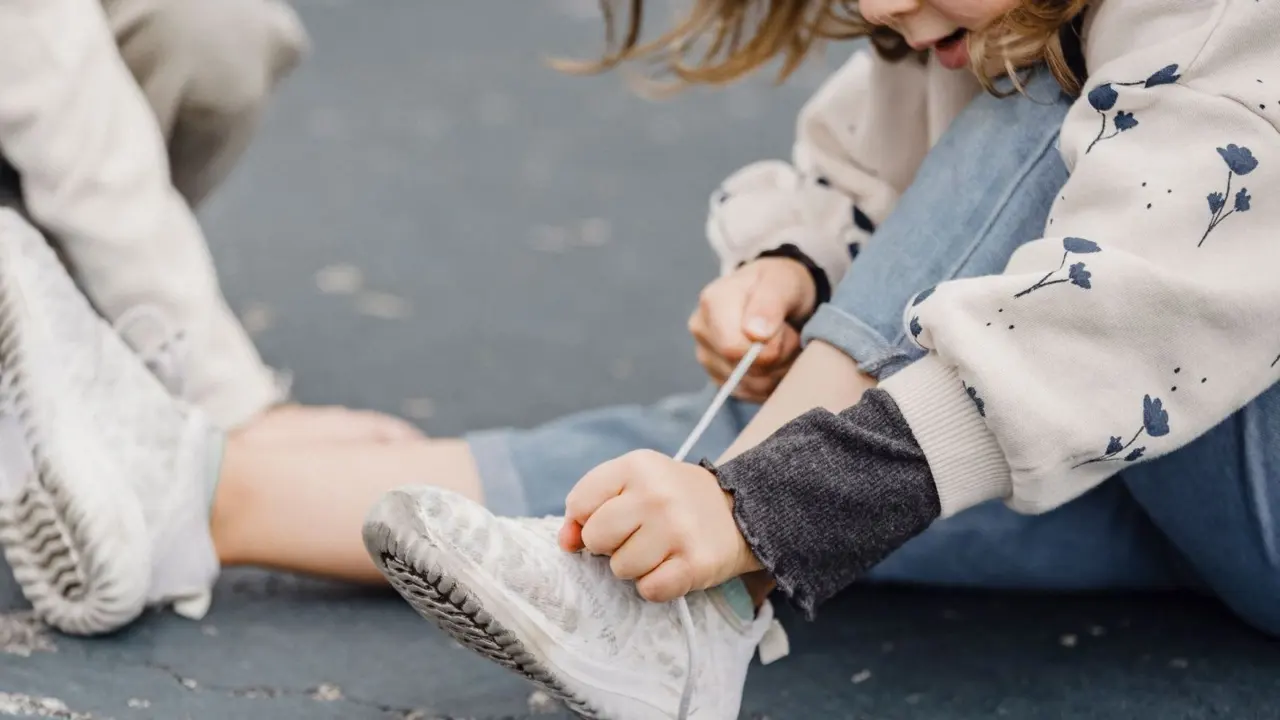
Worried you’ll buy the wrong size? How to buy shoes for kids comes down to measuring both feet, leaving about 1cm of toe room, and choosing shoes that feel comfortable from the first step.
If you are comparing more than kids’ shoes, our footwear buying guide covers the basics for every shopper.
| Item | Value |
|---|---|
| Toe room at the longest toe | About 1cm |
| Maximum heel height | No more than 2.5cm |
| Check for outgrown shoes | Every two to three months |
| Best time to shop | Afternoon |
| Metal spike cleats | Avoid under age 13 |
These figures come from the Suffolk Podiatry children’s footwear leaflet and a Parkview Health podiatry guide. Guidance can change, so check the sources before you rely on the figures.
Measure first, then buy
A child’s feet typically grow quickly, so sizes may change every few months. The HealthDay shoe-shopping tips say to always measure your child’s feet before buying a pair of shoes.
Measure both feet while your child is standing, because one foot is often slightly larger than the other. If the feet differ, buy the size that fits the larger foot.
A podiatry educator quoted by Consumer NZ recommends a Brannock Device, a metal ruler you place the foot in, to measure length and width. Shoe sizes also vary between brands, so fit and comfort matter more than the number on the box, as the Suffolk leaflet explains.
Width deserves the same attention as length, and you can read how to find the right shoe width in our how to find the right shoe width guide. Shoes sold in different width fittings may suit children with narrower heels or wider forefeet.
Use this routine in the shop:
- Measure both feet standing up, ideally with a trained fitter.
- Have your child put on both shoes and walk around while you watch.
- Check for about 1cm of space beyond the longest toe.
- Make sure your child can wiggle their toes in a roomy toe box.
- Squeeze the sides of the shoe to check it is not too tight.
- Confirm the heel holds firmly and the shoe does not slip off.
Shoes should feel comfortable straight away. There is no such thing as a necessary break-in period, and your child should not feel pain or pressure points in the store.
What makes a good kids’ shoe?
The bones in a child’s feet don’t fuse together properly until puberty, according to Consumer NZ’s school shoes guide. That is why it recommends firm and supportive shoes for growing feet.
Look for these features:
- A stable base for walking, running and playing.
- Adjustable fastenings such as laces or a Velcro strap, rather than slip-ons.
- Enough grip to help prevent slipping.
- A supportive heel counter, the back part of the shoe.
- A sole flexible enough to allow natural foot movement.
- A removable insole, in case you need to fit an orthotic later.
To test flexibility, pick the shoe up and push the toe upwards. A good shoe bends at the ball of the foot but no further, and one that folds anywhere it likes will not be supportive enough.
Keep heels low and the shoe light. The Suffolk leaflet says heels should be no greater than 2.5cm, and Consumer NZ warns that heavy shoes can cause muscle pain and foot aches in younger kids.
Toddlers and first shoes
According to a Parkview Health podiatrist, soft shoes tend to be best for babies and toddlers who are not walking yet. Remove the shoes while your little one sleeps, and use a fitted sock for warmth instead.
The same guide says hard-soled shoes are often best once a child has started to walk. A stiff base can help with balance, and these shoes usually have a wider, deeper toe box.
Toddlers are poor at telling you what hurts, so have them try shoes on and check the fit yourself. If your child is between sizes, the podiatrist says it is fine to choose the larger pair.
How often should you check for outgrown shoes?
Kids rarely complain that shoes are too small, so check sizing regularly. Parkview Health advises checking every two to three months, with about half an inch between the big toe and the inside tip of the shoe.
Shop in the afternoon, because feet expand naturally through the day. Trying shoes on later in the day gives a more accurate fit.
Watch for these signs that shoes are too small:
- Nail discoloration or bruising from toes hitting the ends of the shoes.
- Lines on the toes from pressure, or blisters.
- Toes that stay curled for a while after the shoes come off.
- Your child asking to be carried when wearing one particular pair.
- Significant difficulty getting the shoes on.
Consumer NZ adds that a worn-out tread can make shoes slippery, and worn-down heels are another cue to replace them. Resist the urge to buy a bigger pair so your child can grow into it, since shoes that fit well support and protect growing feet.
Shoes for school, sport and play
Children’s feet spend most of their growth period in school shoes, according to the Australian Podiatry Association. It recommends regular measuring for length and width so the shoe suits the natural shape of the foot.
Where school rules allow, supportive trainers are often a better choice than plimsolls, which offer limited support and cushioning. Consumer NZ also calls sneakers a good choice if the uniform policy allows them.
For sport, most children can use the same pair of athletic shoes for most activities. Parkview Health notes that cleats are typically narrower than other footwear, so size them separately, and that children under age 13 should avoid metal spike cleats.
Older teens who start a job needing protective footwear can read what to look for in work boots before they buy.
Finally, skip hand-me-downs where you can. Second-hand shoes may have moulded to another child’s foot shape and may not fit well.
Frequently asked questions
Do new kids’ shoes need breaking in?
Show answer
No. HealthDay’s tips say there is no such thing as a necessary break-in period, so shoes should be comfortable from the start.
Should I buy a size up so they last longer?
Show answer
Consumer NZ advises against it, because shoes that fit well support and protect growing feet. Only go up when your child is between sizes.
Are second-hand shoes okay for kids?
Show answer
They are generally best avoided. They may not fit well and, according to HealthDay, could spread fungal infection.
When should I see a podiatrist about my child’s feet?
Show answer
The Australian Podiatry Association suggests a check-up if you notice uneven shoe wear on the heels, recurrent foot or leg pain, frequent tripping, or toe walking. A podiatrist can also answer any other general concerns about your child’s foot health.