Worried your next online order won’t fit? Here’s how to measure foot size at home: stand on paper, trace each foot, then measure heel to longest toe and across the widest point. Do it in the evening.
Once you have your numbers, our footwear buying guide shows how to put them to work when you shop.
| Item | Value |
|---|---|
| Accuracy of the paper-tracing method | Within half a size |
| Best time to measure | Late afternoon or evening |
| Foot length gained when you stand | 5-10 mm |
| Daily swelling | Up to half a size by late afternoon |
| Toe room in a shoe | About 1/2 inch (a thumb’s width) |
| Rule of thumb for a wide foot | Widest point over 10 cm (women) or 11 cm (men) |
These figures come from a podiatry clinic’s measuring guide and a footwear retailer’s fitting guide. Guidance can change, so check the source before you rely on the numbers.
What you need before you measure
You don’t need special equipment, just a few things from around the house. The most important is a hard, flat floor, because soft surfaces skew the result.
- Two sheets of blank paper, each larger than your foot.
- A pen or pencil you can hold upright.
- A ruler or tape measure.
- Tape to hold the paper still.
- The socks you plan to wear with the shoes.
- A helper, if you have one, to do the tracing.
One retailer’s guide recommends tile or wood and says to avoid plush carpet. A tidy floor is a small step, but it is where most home errors begin.
It is worth the effort. A clinic guide cites research in the Journal of Foot and Ankle Research that found 63-72% of people wear shoes that don’t match their foot dimensions.
How to measure foot size at home, step by step
The method is a paper tracing. It takes only a few minutes, and you repeat it for each foot.
- Tape the paper to the hard floor, with one edge against a wall.
- Put on the socks you will wear with the shoes.
- Stand upright on the paper with your heel touching the wall and your weight spread evenly.
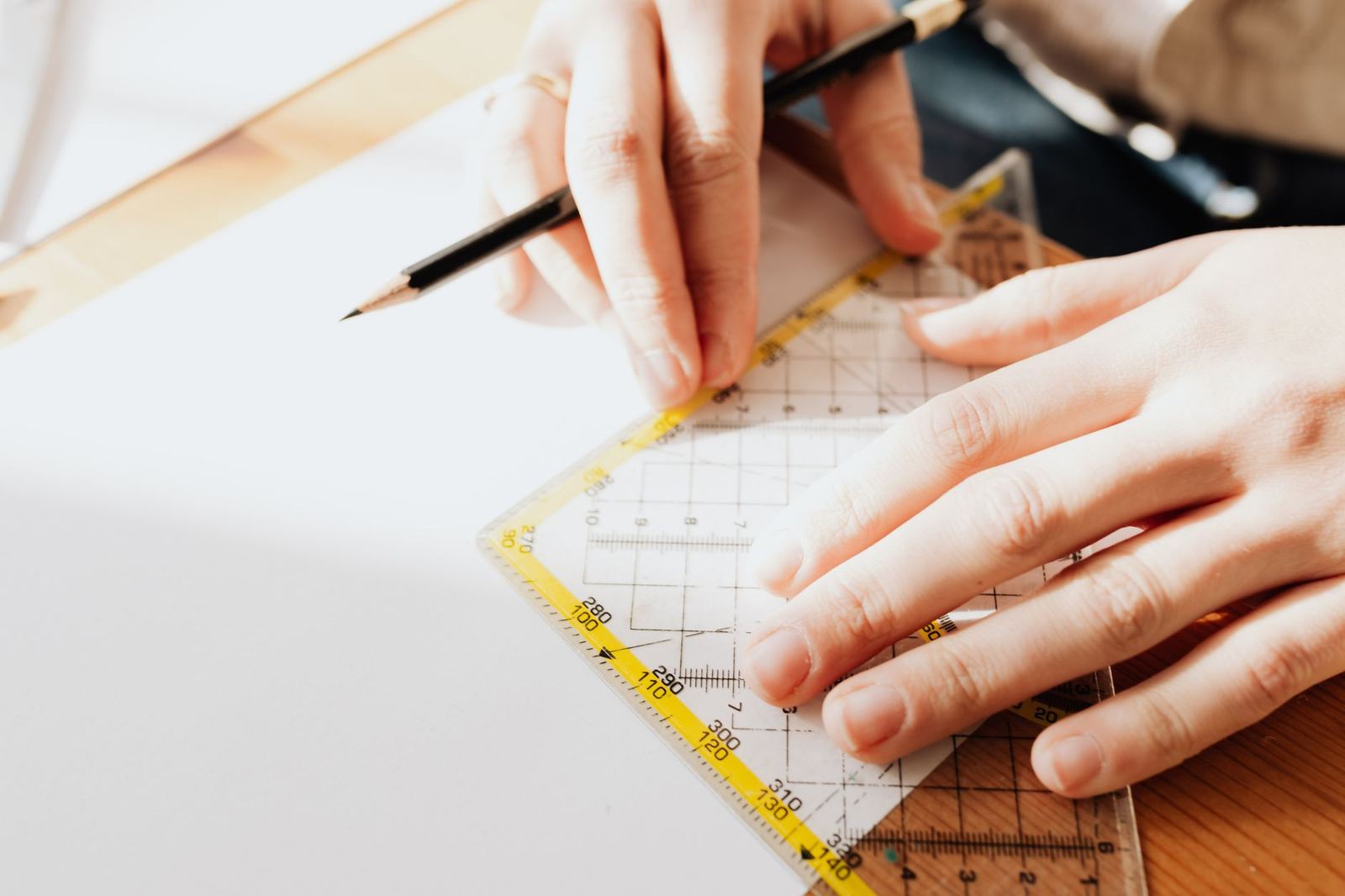
- Trace around your foot with the pen held straight up and down, as close to the foot as you can.
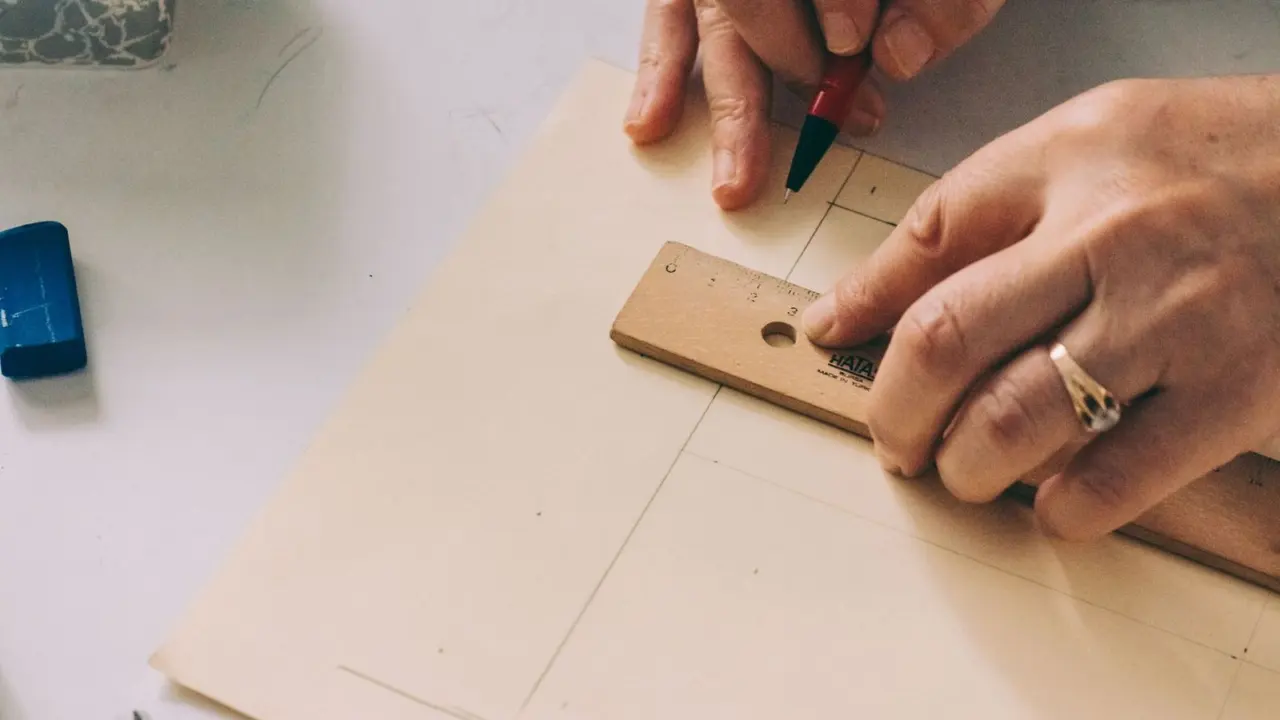
- Step off and draw a straight line from the back of the heel to the tip of your longest toe. Measure it.
- Find the widest part of the outline, usually across the ball of the foot, and measure straight across.
Write both numbers down, then do the other foot. The clinic guide says to stand on the paper with your heel touching the wall, which gives you a clean starting point for the length line.
Keep the pen vertical the whole way round. A retailer’s guide describes a strict 90-degree vertical angle and warns that leaning the pen inward under the foot gives a measurement that is too small.
Your longest toe isn’t always the big toe. A retailer’s guide notes that it is often your second toe, not your big toe, so measure to whichever toe reaches furthest.
Why timing, socks and standing matter
Feet change through the day, so timing changes your result. One guide says your feet can swell by up to half a size by late afternoon, which is why late afternoon or evening is the safest time to measure.
Standing matters as well. A podiatry guide says your foot elongates 5-10 mm when you stand, so a sitting measurement will come out short.
If you can’t stand, you still have an option. A sizing site notes that foot size measurement for wheelchair users can be done without standing.
Socks should match the shoe you are buying. The same clinic suggests athletic socks if measuring for sneakers, dress socks for dress shoes.
Finally, measure both feet. The clinic says it is normal for one foot to be a half-size larger, and you should fit shoes to the larger one.
How do you measure foot width?
Width is measured on the same tracing, straight across the widest point. It is the number people most often skip, and it decides whether a shoe pinches. The clinic lists standard labels that run from narrow to extra wide:
- Women’s widths: 2A (narrow), B (standard), D (wide), 2E (extra wide).
- Men’s widths: B (narrow), D (standard), 2E (wide), 4E (extra wide).
As a general rule, the clinic says that if the widest part of your foot measures more than 10 cm (4 inches) for women or more than 11 cm (4.3 inches) for men, you likely need a wide shoe. Treat this as a starting point and not a verdict.
Your feet can also tell you when a shoe is too narrow. The same guide lists these signs:
- Pressure on the little toe.
- Calluses on the side of the foot.
- The shoe upper bulging over the sole.
- Numbness in the toes after walking.
Arch shape plays a part too. The clinic notes that flat feet need more width and support, and our guide to the best shoes for flat feet covers what to look for.
Turning your numbers into a shoe size
Take your length and compare it with a size chart. One retailer gives a rough guide for US sizing: a women’s foot measuring 9.75 inches is roughly a size 8, and 10 inches is roughly an 8.5, while a men’s 10.5 inches is roughly a size 9.
Always check the brand’s own chart, because there is no common standard. One writer who compared brands concluded that there is no industry standard that says a foot measuring X inches is Y size.
If you land between sizes, guides differ. The clinic says to always round up if you’re between sizes, while another guide says to choose the smaller size for snug dress shoes and the larger size for athletic or casual shoes.
When you are ready to shop for runners, read our guide on how to choose running shoes. Re-measure now and then, too: the clinic recommends re-measuring at least once per year, and always before buying a new pair.
Checking the fit when your shoes arrive
A measurement is only a starting point, so test the shoe itself. The insole check is quick and needs no tools.
- Pull the removable insole out of the shoe and lay it flat on the floor.
- Stand on it with your heel in the back and your weight down.
- Look at the space between your longest toe and the front edge, and at the sides.
The retailer says you should see a clear thumb’s width (roughly 1/2 inch) of space in front of the longest toe. If your toes touch the front edge, it advises a half-size larger.
The gold standard is still a fitting in person. The clinic describes the Brannock device as measuring heel-to-toe length, arch length and width, and a sizing site says a professional shoe fitter will give you the most accurate result.
Frequently asked questions
Can I measure my feet without paper?
Show answer
Yes. A footwear sizing company says you can use a measuring tape directly against your foot, but notes that tracing on paper tends to be more precise.
What if my feet are different sizes?
Show answer
That is common. Use the larger foot’s measurement, since the clinic guide says to always fit to the larger foot.
How accurate is a home measurement?
Show answer
The clinic guide says a Brannock device gives the most accurate result, but that the at-home method is reliable within half a size.
How much room should I leave at the toe?
Show answer
A retailer advises allowing a thumb’s width (1/2 inch) of toe clearance. Check this with the insole test above.