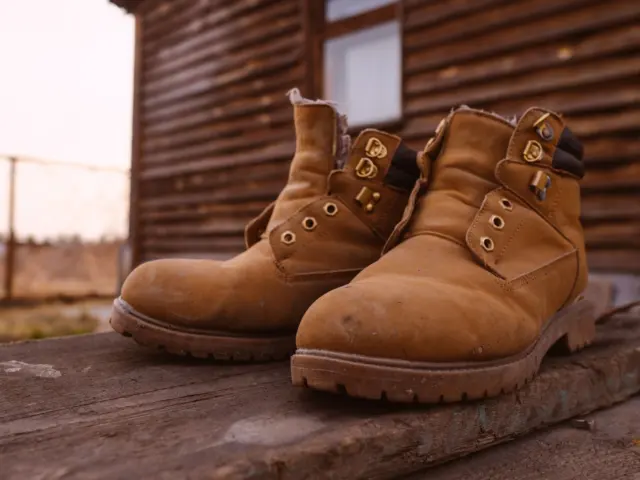
Standing in front of a wall of boots, you just want the right pair. Here’s how to choose hiking boots: match the boot to your pack weight, terrain, waterproofing needs and fit. Get those four right and the rest is detail.
For the wider picture across every shoe type, start with our footwear buying guide.
| Item | Value |
|---|---|
| Weekend backpacking pack load | 25-35 pounds |
| Heavy multi-day pack load | 40+ pounds |
| Low-cut shoe height | Below the ankle bone |
| Mid-cut boot height | Just above the ankle bone |
| Waterproof protection limit in water | Up to the height of the boot collar |
| Retailer guide last reviewed | May 2026 |
These figures come from Grivet Outdoors’ hiking boot guide, last reviewed in May 2026. Retailer guidance can change, so check the source before you rely on them.
Start with the trip you are planning
A specialty outdoor retailer’s fitting guide sums up the decision as four things: how much weight you’ll carry, how technical the trail is, whether you need waterproofing, and whether the boot fits your foot from day one. You can find that checklist in Grivet Outdoors’ guide, and it works because each item narrows your options quickly.
Not every hike needs a boot at all. Match the footwear to the trip first, and the rest gets easier:
- Dry day hikes: a trail running shoe or low-cut hiking shoe usually does the job. It breathes better and weighs less than a boot.
- Day hikes in mixed conditions: a mid-cut waterproof boot handles wet trails, light scrambling and shoulder-season hiking.
- Weekend backpacking: a mid-cut to over-the-ankle boot with stiffer torsional support steadies the load.
- Multi-day trips with heavy loads: a true backpacking boot with a stiff midsole, full ankle support and a durable leather upper.
- Wet, snowy or cold-weather hiking: insulated waterproof boots are their own category.
Pack weight is the clearest dividing line. According to Grivet’s May 2026 guide, 25-35 pounds on a weekend trip calls for more support, while 40+ pounds on rough terrain is where a real backpacking boot earns its weight.
The same guide names the Oboz Bozeman Low as an example of a low-cut shoe for dry trails. It names the Oboz Bridger Mid B-Dry as an example of a mid-cut waterproof boot for mixed conditions, as listed in its May 2026 review.
Cut height and ankle support
Cut height changes ankle support, weight and breathability. None is universally better, so choose the one that fits how you hike.
Low-cut hiking shoes sit below the ankle bone. Grivet describes them as essentially trail runners with hiking-specific outsoles, which makes them light, breathable and versatile for established trails (source, reviewed May 2026).
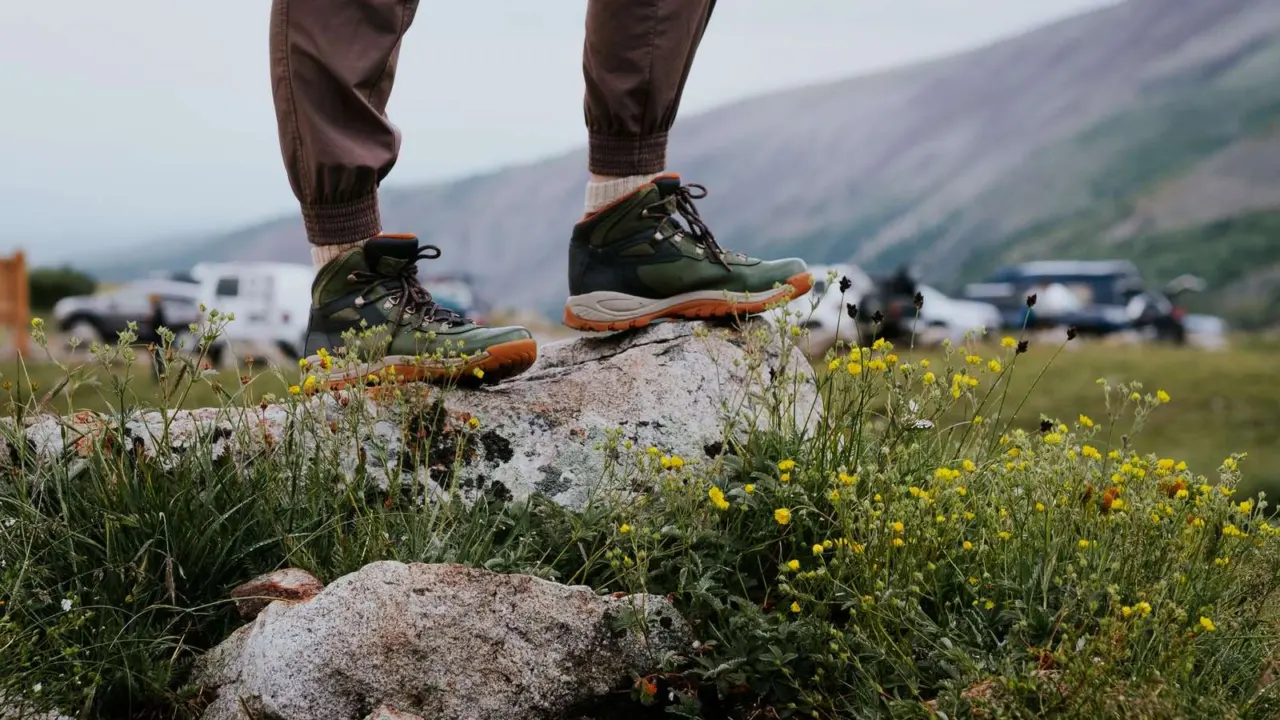
Mid-cut boots sit just above the ankle bone and, per the same guide, are the most-purchased category. They add some ankle support without the weight penalty of a full boot, and they work from day hikes through weekend backpacking.
Over-the-ankle boots rise well above the ankle, often with a higher heel collar. They give the most support and protection and suit heavy loads, technical terrain and multi-day trips, but they are the heaviest of the three.
A simple way to think about it: the more weight on your back and the rougher the ground, the higher the cut you should consider. If you carry little and stay on groomed paths, going lower saves weight.
Waterproof or breathable?
Most hiking boots come in two versions: a standard one that is more breathable and dries fast, and a waterproof one with a membrane. Neither is better in every situation, because the trade-off is dry feet against cool feet.
Waterproof boots keep your feet dry through wet grass, light puddles and creek crossings up to the height of the boot collar. They also trap heat, as Grivet’s guide, reviewed in May 2026, points out.
- Choose waterproof for shoulder seasons, wet climates, snow and any hike where dry feet matter more than cool feet.
- Choose standard breathable for hot, dry climates and warm-weather day hikes. The upper lets air move through, and it dries faster after a soaking.
Remember the collar limit. Once water rises above the top of the boot, it pours in over the cuff, and a waterproof lining then slows drying. Deep crossings are a reason to plan the route, not a job for any boot.
Fit comes first
A boot that suits your trip on paper still fails if it does not fit your foot from day one. That is why retail fit teams weigh trip length, pack weight, terrain, foot shape and volume, and waterproofing needs together, according to the retailer’s guide.
Use the checklist below as a pass-or-fail test before you commit to a pair:
- Decide the trip type and expected pack weight.
- Pick the cut height that matches that load and terrain.
- Choose waterproof or breathable for your climate and season.
- Check that the boot fits your foot shape and volume from the first wear.
If a boot fails the last step, move on to another model rather than hoping it will change. Foot shape and volume vary, so a boot that works well for a friend may not work for you.
When a boot is not the right tool
Some trips call for lighter footwear, and some for something more rugged. If you mostly stroll paved or groomed routes, our guide on how to choose walking shoes may suit you better than a boot.
If you need protection for a job rather than a trail, read about what to look for in work boots, since the priorities differ.
For going light and fast on groomed trails with no pack, a trail running shoe can be the better tool. Boots earn their place when pack weight or terrain rules out a flexible runner.
Frequently asked questions
Do I need hiking boots for day hikes?
Show answer
Often not. As of Grivet Outdoors’ May 2026 review, most hikers on dry day trails do not need a boot, and a trail running shoe or low-cut hiking shoe breathes better and weighs less.
Are waterproof hiking boots always the better choice?
Show answer
No. Waterproof boots keep water out up to the collar but also trap heat, so standard breathable boots suit hot, dry climates and warm-weather day hikes better.
Which cut height is the most popular?
Show answer
Mid-cut. The same May 2026 guide calls mid-cut boots the most-purchased category, because they add ankle support without the weight of a full boot.
How much pack weight calls for more support?
Show answer
The retailer’s guide says 25-35 pounds on a weekend trip calls for more support, and 40+ pounds on rough terrain is where a full backpacking boot makes sense. Check the source, as such guidance can change.