Standing in a shoe aisle and unsure which pair deserves your money? How to choose walking shoes comes down to fit, cushioning, stable soles and flexibility. Try them in person, later in the day, and walk laps before you buy.
This page is part of the footwear buying guide, which covers other types of shoes too.
| Item | Value |
|---|---|
| Moderate walking linked to lower heart disease, Type 2 diabetes and obesity risk (ACSM) | At least 150 minutes per week |
| Walking aimed at weight loss | 250 minutes or more per week |
| Force on your feet with each step | Two to three times your body weight |
| Typical steps in a day | 4,000 to 6,000 steps |
| Arch height categories | Three: flat, normal or high |
These figures come from Fit&Well and a podiatry clinic’s guide. They can change, so check the source before you rely on them.
Start with your feet, not the shoe wall
Before you shop, learn your arch type. A podiatry clinic’s guide says arch height falls into three categories (flat, normal or high) and suggests a wet foot test: step out of a shallow pan of water onto cardboard or a paper bag and look at the footprint.
Check the wear on your current shoes as well. The same guide says overpronation, or inward rolling, wears the inner edge of the heel and ball of the shoe.
Shoe labels often reflect this. A podiatrist quoted by Reviewed describes three common categories:
- Neutral: the most common type, usually lightweight and lightly cushioned.
- Stability: for people who pronate more, usually built with a dense midsole to stop feet collapsing inward.
- Motion control: for people who overpronate the most, usually heavier and stiffer than stability shoes.
Features to check on every pair
A physical therapist quoted by Harvard Health highlights a short list of features. Use it as a checklist in the store.
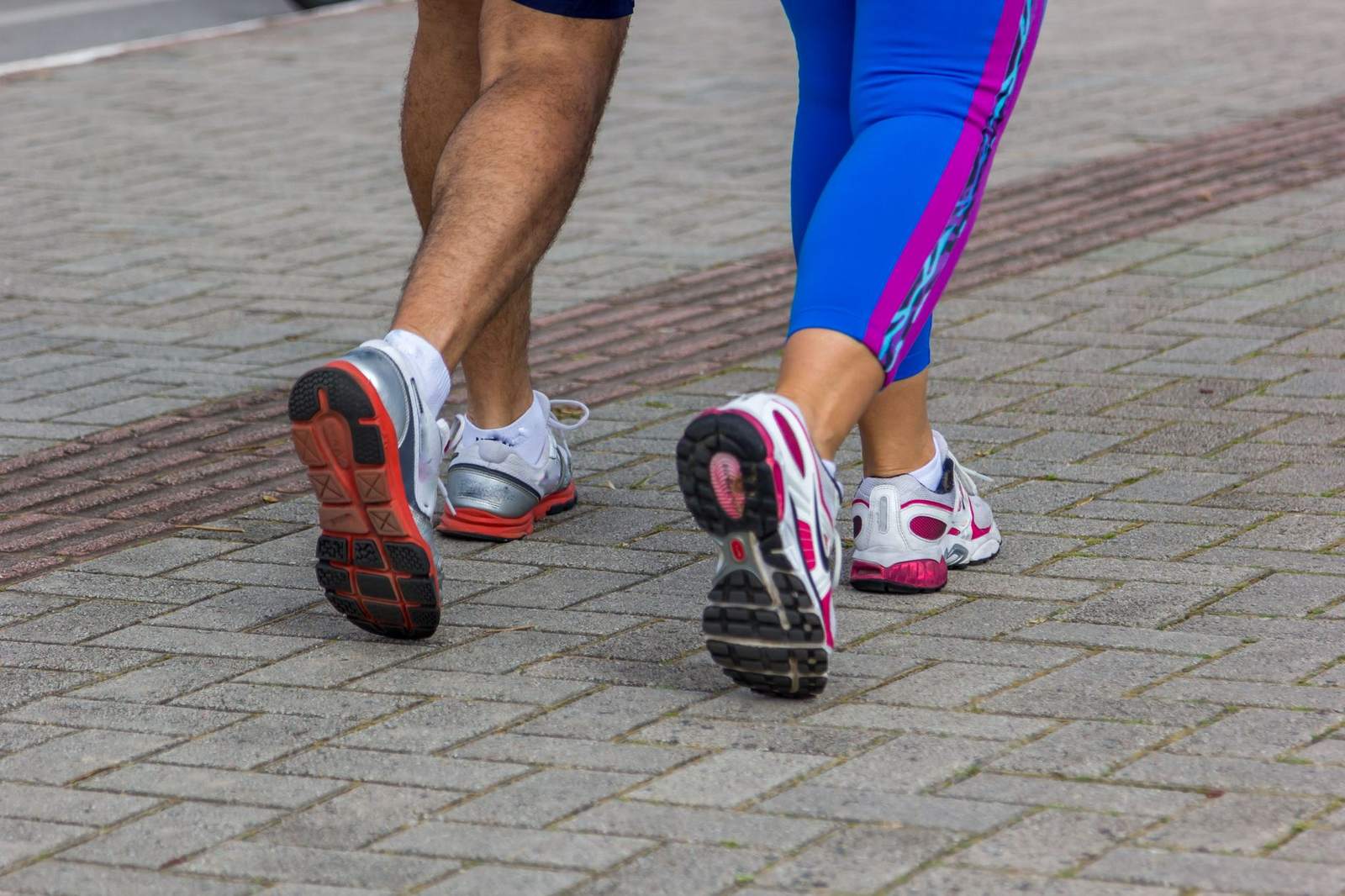
- Supportive, stable sole: running shoes are often too light to give the stability you need, and rocker-type soles can feel unbalancing if you have balance concerns.
- Secure fit: your heel should stay in place without slipping. The advice is snug, but not tight.
- Light weight: a really heavy shoe is harder to lift and tires you faster.
- Flexibility: the shoe should bend where your foot naturally bends.
- Toe room: your toes should not touch the end of the shoe, and you should be able to wiggle them. Mesh usually has more give than solid leather.
Add cushioning to that list. A podiatrist quoted by Fit&Well says good cushioning matters on any terrain, and that city pavements and roads are far harder on the feet than fields and grasslands.
Foot problems change the amount you need. The same podiatrist notes that someone with bunions may need more cushioning for comfort.
How should walking shoes fit?
Size is an easy place to go wrong. A podiatrist quoted by Reviewed says he typically sees people choosing shoes that are too small, and that over time this causes problems.
The same source says jamming your feet into shoes that are too small can cause issues such as hammertoes or bunions, as well as corns and calluses. That makes the size check the first job in the store.
Allow for your socks. The podiatrist in the Fit&Well feature says walking shoes might need to be slightly larger to fit thicker socks. Because manufacturers differ in design, he advises trying shoes on in person.
Follow these steps in the store:
- Shop later in the day, when feet may be slightly swollen. The podiatry clinic’s guide likewise says to measure at the end of the day, when feet are at their largest.
- Measure both feet. Harvard Health suggests buying the bigger size and wearing a second pair of socks on the smaller foot, and a podiatry clinic notes that one foot can be up to a half-size larger than the other.
- Put the shoes on with your everyday walking socks, so the fit matches real use.
- Walk a few laps around the store. Harvard Health quotes the advice not to just take five steps in them.
While you walk, pay attention to the heel. Harvard Health says it should stay comfortably in place without slipping, and the Fit&Well podiatrist adds that your foot shouldn’t feel as if it is shifting as you walk.
The shop matters too. The Reviewed podiatrist suggests finding a store that measures your feet sitting down and then standing, and that watches you walk to get a general idea of your foot type. A good store, he says, will also ask about your goals, such as whether you want to walk casually or for performance.
Fit also drifts over time. The same podiatrist recommends having your feet measured every two years at a store whose staff are trained to fit shoes for your activity, according to Reviewed.
Match the shoe to your terrain and walking goal
According to Harvard Health, fitness walking asks for more attention to cushioning, weight and breathability. For trails or tougher ground, it suggests looking at shoes built for balance and stability.
Rough ground changes the brief. The Fit&Well podiatrist says rocky terrain calls for a stiffer, boot-style shoe with higher ankle support. The guide on how to choose hiking boots covers that category in more detail.
Experts disagree on running shoes. A podiatrist quoted by Reviewed generally recommends a running shoe for walking, noting that most walking shoes use faux leather that is not highly breathable. The Harvard Health physical therapist warns that running shoes are often too light for stability.
The practical answer is to test both types. Pick the pair that feels stable under you and that suits the ground you walk on most.
How age and health conditions change the choice
Feet change over the years. Harvard Health says feet may become longer and wider, the arch may flatten, and reduced sensation, for example in people with diabetes, makes fit especially important.
A podiatry clinic’s guide links specific conditions to specific features:
- Plantar fasciitis: firm heel counters and substantial arch support.
- Bunions or hammertoes: wide toe boxes that avoid friction.
- Diabetes: extra depth, seamless interiors and soft, non-binding uppers.
If you have low arches, the best shoes for flat feet page goes further on that topic.
Advice on rocker soles is mixed. The same clinic guide says arthritis in the foot joints calls for them, while the Harvard Health therapist cautions against them if you have balance concerns. This page is general information, not medical advice, so ask a clinician if you have pain or a diagnosed condition.
Frequently asked questions
How much should I walk each week?
Show answer
The American College of Sports Medicine recommends at least 150 minutes of moderate-intensity exercise a week, according to Fit&Well. For weight loss, the same feature says to aim for 250 minutes or more.
Can I wear running shoes for walking?
Show answer
Some podiatrists do recommend it, but a physical therapist quoted by Harvard Health says running shoes can be too light for stability. Try a pair and check how steady it feels.
When is the best time to try on shoes?
Show answer
Later in the day, when feet may be slightly swollen, according to Harvard Health. Wear the socks you normally walk in.
Do pricier walking shoes last longer?
Show answer
Not always. A podiatrist quoted by Reviewed says prices are not always a sign of quality, but expects you to spend at least $80 on a decent, supportive pair.